
OMOGANEYA Technical Academy 〜 OMOGANEYA Technical School 〜
Marine Pistons: An Overview
3.1 What Is a Piston?
In a diesel engine, the component that reciprocates inside the cylinder and forms the combustion chamber together with the cylinder and cylinder head is called the piston.
The reciprocating motion of the piston changes the cylinder volume and compresses the air inside the cylinder.
The piston also receives the pressure generated by combustion on its crown and transmits the resulting force to the crankshaft through the connecting rod.
3.2 Properties Required of a Piston
Because a piston reciprocates while being exposed to high-temperature, high-pressure combustion gases, it must have sufficient strength and durability.
Good thermal conductivity is also important so that the heat received during combustion can be dissipated effectively. In addition, the piston should be lightweight while maintaining sufficient strength in order to reduce the inertia forces generated by its reciprocating motion.
The lower part of the piston, known as the piston skirt, slides against the inner surface of the cylinder and therefore requires properties such as high wear resistance.
3.3 Materials
The materials used for pistons vary according to the type of engine and its operating conditions.
In low- and medium-speed engines, cast iron or special cast iron containing elements such as nickel and manganese is used.
In high-speed engines, aluminum alloys are used to reduce the weight of the reciprocating components.
In medium- and large-sized engines, some pistons are assembled from multiple components, with different materials used for the piston crown and skirt.
For example, the piston crown may be made of cast steel because it is exposed to high-temperature, high-pressure combustion gases, while the piston skirt may be made of cast iron.
3.4 Types of Pistons
According to their construction, pistons can be classified as one-piece pistons or composite pistons.
Depending on the mechanism used to transmit force from the piston to the crankshaft, engines can also be classified as trunk-piston engines or crosshead engines.
One-Piece and Composite Pistons
A piston in which the crown and lower skirt are manufactured as a single component is called a one-piece piston. A piston in which these parts are manufactured separately and then assembled is called a composite piston.
Trunk-Piston and Crosshead Types
In the trunk-piston type, the piston is connected directly to the connecting rod by a piston pin.
In the crosshead type, a piston rod and crosshead are installed between the piston and connecting rod.
The basic structures of these two types are shown in Figure 3.1.
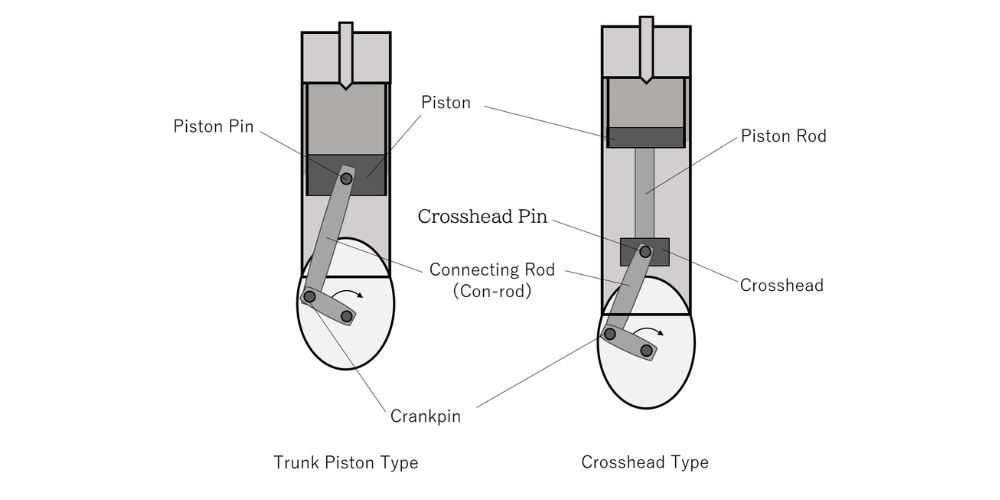
Figure 3.1 Trunk-Piston and Crosshead Types
Because the trunk-piston type does not require a crosshead or piston rod, the overall height of the engine can be reduced.
However, as the connecting rod inclines with the rotation of the crankshaft, the piston is subjected to a lateral force known as side thrust.
About This Article
Reference
・Introduction to Marine Diesel Propulsion Plants, edited by the Maritime College Career Education Research Association
※This article was prepared with reference to the source listed above and organized based on the author’s understanding.

Written by
- Company
- Marine Techno Services, Ltd.
- Business
- ・Import and export of marine machinery and equipment
・Renewable energy-related services
・Procurement and sale of industrial equipment and products - URL
- https://marinetechno.jp/
- Contact
- info@marinetechno.jp
Contact Us
contactFeel free to contact us about listing your products or services, questions on existing listings, or procurement, sales, and trade support through OMOGANEYA.